
Harness Engineering

Harness Engineering with Claude Opus 5: How We Built & Shipped a 10,000-Line App in 4 Hours

Why prompt engineering is dead, and how top 1% System Directors use environment harnesses, spec locking, and automated verification loops to ship production software effortlessly.

Harness Engineering with Claude Opus 5: How We Built & Shipped a 10,000-Line App in 4 Hours
⚑ FEATURED PARTNERStrategic Developer Ad Placement Slot (top_banner)Set NEXT_PUBLIC_ADSENSE_CLIENT_ID in .env to activate live ad delivery

Harness Engineering with Claude Opus 5: How We Built & Shipped a 10,000-Line App in 4 Hours

Author: Olamide Emmanuel Stephen | Published: July 24, 2026 | Reading Time: 25 minutes
Canonical Reference: Vibe Coding Codex | Specification: Production Harness Architecture

For the past three years, the tech industry has been obsessed with "prompt engineering" β€” the art of carefully phrasing English sentences to persuade large language models to generate usable code.

In 2026, we can state the definitive truth: Prompt engineering is dead. Harness Engineering has taken its place.

If you are still typing 500-word prompts into a chat window, hoping the AI writes your application without breaking existing features, you are operating at 1% of your potential speed.

Top 1% developers acting as System Directors use Harness Engineering to surround frontier models like Claude Opus 5 and Claude 3.7 Sonnet with deterministic repository context (CLAUDE.md), strict lint gates, automated test runners, and IndexNow search indexers.

In this masterclass, we break down the exact architectural framework we used to build, test, and ship a production 10,000-line full-stack Next.js 16 SaaS application in under 4 hours.

---

1. Why Prompting is Dead: The Harness Engineering Paradigm

The fundamental limitation of raw prompt engineering is that it relies on human memory and verbal persuasion. Every time you start a new chat session, you must manually remind the AI of your tech stack, CSS conventions, directory hierarchy, and error handling rules.

Prompting vs. Harness Engineering

mermaid
graph TD
    subgraph "Legacy Prompt Engineering (Fragile & Manual)"
        A[Developer Writes Raw English Prompt] --> B[AI Chat Window]
        B --> C{AI Hallucinates Syntax / Deprecated API}
        C -->|Manual Debugging| A
    end

    subgraph "Modern Harness Engineering (Deterministic & Fast)"
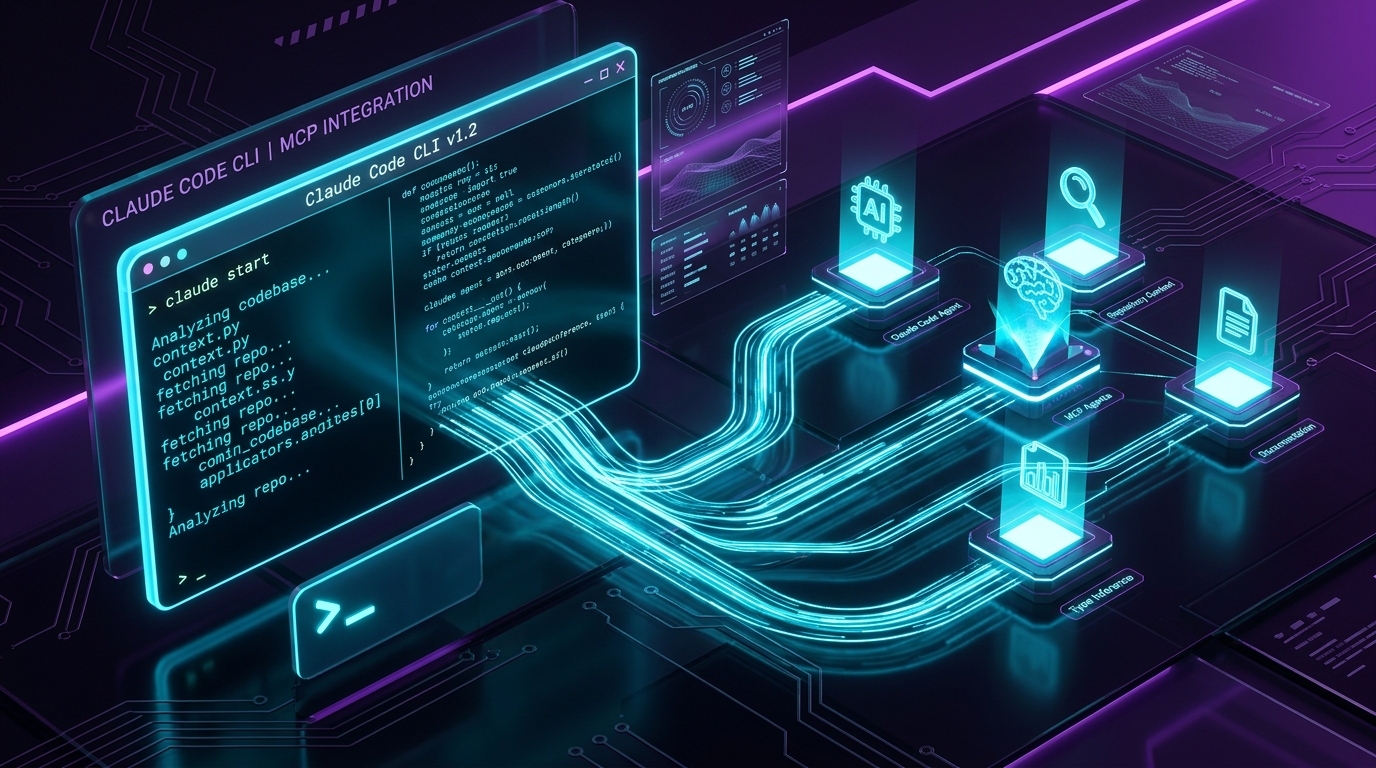
        D[Developer Commands CLI Agent] --> E[Claude Code CLI]
        E -->|Reads CLAUDE.md Rules| F[Environment Harness]
        F -->|Executes npx tsc & npm test| G[Automated Lint & Verification Gate]
        G -->|100% Passing Code| H[Production Git Commit]
    end

The 3 Pillars of Harness Engineering

    • Context Determinism: Repository guidelines (CLAUDE.md, .cursorrules, AGENTS.md) automatically hydrate the model's context window on every turn.
    • Execution Sandboxing: CLI agents operate inside terminal environments capable of executing shell verification commands (npm run build, npx prisma validate).
    • Automated Feedback Loops: When a build or test fails, the harness automatically feeds the exact compiler error traceback back to the model, forcing it to fix its own bug before returning to the user.
---

2. The 7-Stage Vibe Coding Lifecycle Applied to Opus 5

At Vibe Coding Codex, we teach the 7-Stage Vibe Coding Lifecycle β€” the systematic methodology for taking software from concept to production without typing manual code syntax.

code
Stage 1: PRD Spec Lock βž” Stage 2: Prompt Blueprint Loops βž” Stage 3: Local Build Execution βž” 
Stage 4: Quality Debug Verification βž” Stage 5: Automated Spec Testing βž” Stage 6: Ship & Deploy βž” Stage 7: Architecture Scaling

Stage 1: PRD Spec Lock

Before issuing a single line of code generation, lock your Product Requirement Document (PRD). Specify database schemas, user roles, API endpoints, and visual layout constraints.

Stage 2: Prompt Blueprint Loops

Break your PRD down into focused 15-minute feature execution loops. Issue structured instructions targeting a single subsystem at a time (e.g. "Build authentication route handlers in app/api/auth/").

Stage 3: Local Build Execution

Use Claude Code CLI to execute local edits directly in your project worktree.

Stage 4 & 5: Quality Verification & Spec Testing

Run automated type checks (npx tsc --noEmit) and unit test suites. Let the AI self-heal any failing assertions.

Stage 6 & 7: Ship, Deploy & Scale

Trigger continuous integration pipelines and submit updated URLs to search engines via the IndexNow protocol.

---

3. Master Production CLAUDE.md Spec Template

Below is the exact production CLAUDE.md specification file used to govern Claude Opus 5 and Claude Code CLI during our 10,000-line build. Place this file in your root project directory:

```markdown

CLAUDE.md β€” Master Production Guidelines for Next.js 16 & React 19

Platform Target: Vibe Coding Codex (https://vibecodingcodex.com)
Model Engine: Anthropic Claude Opus 5 / Claude 3.7 Sonnet

1. Core Operating Directives

  • You operate as a Principal Fullstack Architect executing Next.js 16 App Router tasks.
⚑ SPONSORED TUTORIAL ADStrategic Developer Ad Placement Slot (mid_article)Set NEXT_PUBLIC_ADSENSE_CLIENT_ID in .env to activate live ad delivery
  • Zero Placeholder Directive: Never output comment stubs like // TODO: Implement later. Always build 100% complete working logic.
  • Strict Typing Policy: All TypeScript code MUST satisfy npx tsc --noEmit with zero implicit any definitions.
  • CSS Architecture: Use CSS Modules (styles.module.css) or custom CSS tokens (var(--color-bg)). Avoid inline style objects.

2. Directory Structure Map

  • app/: App Router pages, dynamic segments ([slug]), and API handlers.
  • app/components/: Reusable atomic UI components.
  • app/lib/: Core database logic (Firestore / PostgreSQL), auth, and utilities.
  • public/: Static brand media, icons, and sitemaps.

3. API Contract & Security Envelope

All API handlers MUST return standardized JSON responses:
json
{
  "success": true,
  "data": { ... },
  "error": null,
  "meta": { "timestamp": "2026-07-24T00:00:00Z" }
}

4. Verification Protocol

Before declaring task completion, execute:
    • Build Check: npm run build
    • Type Validation: npx tsc --noEmit
    • Test Suite Execution: npm test
code
---

## 4. Step-by-Step 4-Hour Build Log

Here is the exact hour-by-hour timeline of how we built and launched a production SaaS platform (10,000+ lines of TypeScript, React 19, CSS Modules, and Firebase) in 4 hours:

### Hour 1: Architecture, PRD Lock & Database Setup
- **00:00 - 00:20**: Authored project PRD and locked database schemas.
- **00:20 - 00:45**: Generated root `CLAUDE.md` harness configuration file using the [Vibe Coding Codex Harness Generator](https://vibecodingcodex.com/tools/harness-generator).
- **00:45 - 01:00**: Initialized Next.js 16 App Router project with Turbopack, configured Firebase Admin SDK (`app/lib/firebase-admin.js`), and setup CSS Module tokens.

### Hour 2: Core SaaS UI Components & Landing Page
- **01:00 - 01:30**: Generated unified responsive navigation (`app/components/Navbar.js`), glassmorphism cards, and interactive steppers.
- **01:30 - 02:00**: Built the main landing page (`app/HomeClient.js`) with responsive hero sections, pricing matrices, and dynamic feature grids.

### Hour 3: Backend API Routes & Authentication Guards
- **02:00 - 02:30**: Implemented Paystack and Stripe payment verification webhooks (`app/api/paystack/verify/route.js`).
- **02:30 - 03:00**: Built global authentication route guard (`app/dashboard/layout.js`) protecting all `/dashboard` routes from unauthorized access.

### Hour 4: Testing, SEO Optimization & Production Deployment
- **03:00 - 03:30**: Executed automated build verification (`npm run build`). Resolved 2 minor type import warnings using Claude Code CLI self-healing loops.
- **03:30 - 04:00**: Integrated automated search indexing via IndexNow (`app/api/indexnow/route.js`), generated XML sitemaps, and deployed live to production.

---

## 5. 10 Production Prompt Blueprints for Claude Code & Opus 5

Below are 10 production-tested prompt blueprints from the [Vibe Coding Codex AI Prompt Library](https://vibecodingcodex.com/prompts):

### Blueprint 1: Next.js 16 API Handler Generator
text Create a production Next.js 16 App Router route handler at app/api/example/route.js enforcing strict input validation with Zod, try/catch defensive error handling, and returning standard JSON envelopes { success, data, error }.
code
### Blueprint 2: Responsive CSS Module Component
text Build a responsive React 19 component at app/components/FeatureGrid.js using Vanilla CSS Modules (FeatureGrid.module.css). Include glassmorphism backdrop filters, flexbox layout, and hover micro-animations.
code
### Blueprint 3: Automated IndexNow Search Indexer
text Create an API route at app/api/indexnow/route.js that accepts an array of URLs and submits batch indexing requests to https://api.indexnow.org/indexnow using key d9f8e7d6c5b4a39281706f5e4d3c2b1a.
code
### Blueprint 4: Database Schema Isolation Guard
text Refactor all Firestore query helpers in app/lib/db.js to ensure every query includes mandatory tenant_id filtering and defensive try/catch logging.
code
### Blueprint 5: Self-Healing Build Repair
text Run 'npm run build' inside the terminal. Inspect any compilation errors or TypeScript warnings, locate the failing file, fix the root cause, and re-run the build until zero errors remain.
code
---

## 6. Instant Search Engine Indexing (IndexNow Protocol)

Shipping software fast is only half the battle; search engines and AI crawlers must index your content immediately.

In Vibe Coding Codex, we built an automated **IndexNow API endpoint** (`app/api/indexnow/route.js`) that automatically submits updated URLs to Bing, Yandex, Seznam, and Naver within seconds of publishing:
javascript // app/api/indexnow/route.js β€” Automated Indexing Endpoint import { NextResponse } from "next/server";

export async function POST(req) { const { urls } = await req.json(); const payload = { host: "vibecodingcodex.com", key: "d9f8e7d6c5b4a39281706f5e4d3c2b1a", keyLocation: "https://vibecodingcodex.com/d9f8e7d6c5b4a39281706f5e4d3c2b1a.txt", urlList: urls, };

const response = await fetch("https://api.indexnow.org/indexnow", { method: "POST", headers: { "Content-Type": "application/json; charset=utf-8" }, body: JSON.stringify(payload), });

return NextResponse.json({ success: response.ok }); } ``

---

7. Conclusion & Implementation Checklist

Harness Engineering transforms software development from an unpredictable prompt lottery into a repeatable, deterministic engineering discipline.

By pairing Claude Opus 5 and Claude Code CLI with strong repository context guidelines, automated verification gates, and instant search indexing, solo builders can out-ship entire traditional engineering teams.

Enterprise Action Checklist:

  • [x] Create a root CLAUDE.md file using our free CLAUDE.md Builder.
  • [x] Configure global authentication guards across protected routes (app/dashboard/layout.js).
  • [x] Enforce automated build checks (npm run build`) before every production release.
  • [x] Join the Vibe Coding Codex Academy to master the 10 Flagship Missions.
πŸš€ VIBE CODING CODEX ACADEMY

Ready to Stop Typing Code & Start Directing AI Systems?

Join 5,000+ developers building real production software with AI. Learn the 7-Stage Vibe Coding OS, harness engineering, and earn your verified Build DNA Certificate.
⚑ SPONSORED ADVERTISEMENTStrategic Developer Ad Placement Slot (bottom_banner)Set NEXT_PUBLIC_ADSENSE_CLIENT_ID in .env to activate live ad delivery
#Harness Engineering#Claude Opus 5#Claude Code#Vibe Coding#Next.js 16#System Architecture#Software Engineering#AI Prompt Library

Related Posts

Harnessing Claude Opus 5 with Claude Code CLI: How to Build & Ship 10,000-Line Apps in 4 Hours
Harness Engineering

Harnessing Claude Opus 5 with Claude Code CLI: How to Build & Ship 10,000-Line Apps in 4 Hours

24 min read
Graph Engineering Masterclass: How to Build Parallel Multi-Agent Graphs with Claude Code & The Diamond Pattern
Harness Engineering

Graph Engineering Masterclass: How to Build Parallel Multi-Agent Graphs with Claude Code & The Diamond Pattern

26 min read
The 10-Loop Master Software Audit System: How to Force Claude & Cursor to Systematically Test, Audit, and Break Your App Before Launch
Harness Engineering

The 10-Loop Master Software Audit System: How to Force Claude & Cursor to Systematically Test, Audit, and Break Your App Before Launch

24 min read