How to Become an AI Engineer in 2026 (Without a CS Degree): The 12-Month Shipped-Portfolio Blueprint
Author: Olamide Emmanuel Stephen | Published: July 24, 2026 | Reading Time: 28 minutes
Canonical Reference: Vibe Coding Codex | Specification: AI Engineering Career Pathway
Most people still believe you need a master's degree or a computer science diploma from a top university to work as an AI Engineer.
A small, ambitious group of self-taught builders figured out a secret: The highest-paid building roles in tech right now do not care what your diploma says. They care about what you have shipped.
The difference between those two groups is not academic credentials. The difference is a portfolio.
An AI engineer is the software practitioner who builds the production systems connecting large language models (LLMs) to real software products. The customer support agent that actually resolves complex database tickets without hallucinations. The internal semantic search engine that retrieves answers buried across 50,000 PDF documents in sub-seconds. The autonomous code refactoring loop that tests and deploys pull requests without human babysitting.
This is not machine learning research. It is not training 70-billion-parameter models from scratch on GPU clusters. It is building production software with AI at the core.
In this master blueprint, we map out the exact 12-month timeline for breaking into AI engineering without a CS degree, complete with Python code examples, RAG vector architectures, agent loops, Evals, and portfolio project specifications.
---
1. First, Understand What This Job Actually Is
Before writing code, get the role crystal clear in your mind. Most self-taught aspiring engineers waste months aiming at the wrong target.
There are two distinct roles in the AI ecosystem that people constantly confuse:
- The Machine Learning Researcher: Invents new mathematical neural network architectures, trains foundational models from scratch, and writes academic papers. This work genuinely requires advanced calculus, linear algebra, and PhD-level academic credentials. It represents less than 5% of open market roles.
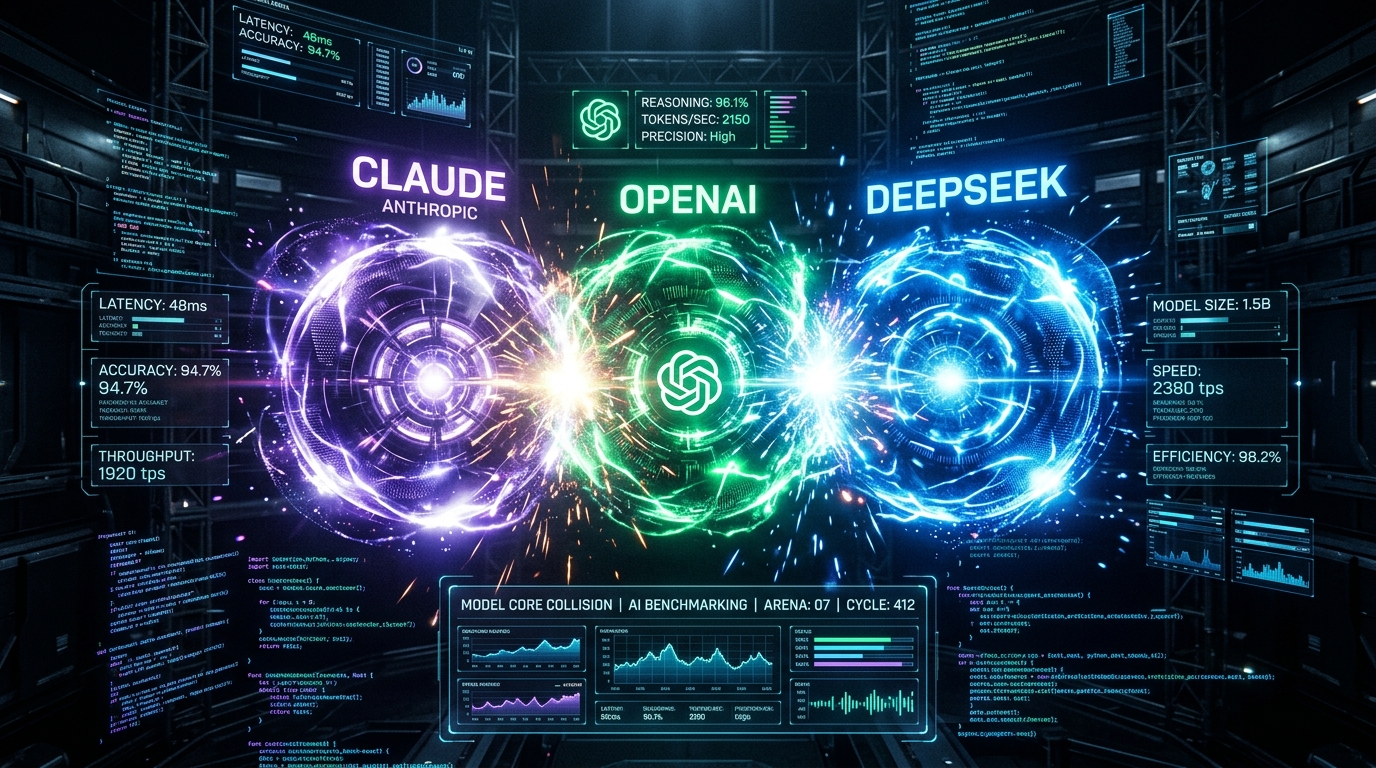
- The AI Engineer: Takes pre-trained frontier models (Claude Opus 5, Claude 3.7 Sonnet, OpenAI o3-mini, DeepSeek R1) and builds useful, reliable software products with them. This work rewards software engineering skill, product sense, harness design, and shipping discipline far more than academic credentials.
You are aiming to become the engineer who builds with AI, not the scientist who builds the AI. That single distinction will save you from wasting six months on multivariable calculus you do not need yet.
---
2. The 12-Month Roadmap at a Glance
---
3. Phase 1 (Months 1–3): Learn to Code Properly
This is the step you cannot skip, and the step most amateurs try to skip.
You must be able to write real, working code before anything else makes sense. Python is the standard. Almost every AI library, SDK, and framework (LangChain, LlamaIndex, Instructor, OpenAI, Anthropic, PyDantic) is built for Python first.
Spend these three months getting genuinely comfortable. Not "I watched a tutorial" comfortable, but "I can write a program from a blank file without looking up basic syntax" comfortable.
Core Concepts to Master:
- Variables, data types, dictionaries, lists, and list comprehensions.
- Functions, modules, error handling (
try/except), and file I/O. - Working with REST APIs using
requestsorhttpx. - Version control using Git and GitHub from day one.
Code Blueprint: Your First Python API Integration
Phase 1 Execution Checklist:
- [x] Write Python code every single day for at least 45 minutes.
- [x] Build 5 tiny programs from scratch: a calculator, a file organizer, a script calling a public API, a data cleaner, and a CLI note taker.
- [x] Push all 5 projects to a public GitHub repository.
4. Phase 2 (Months 3–5): Master the LLM API
Now you start working with the core defining tool of the job.
Consumers interact with models through chat interfaces. AI Engineers work through the API, sending structured requests programmatically and parsing responses.
Core Concepts to Master:
- Calling OpenAI, Anthropic, and DeepSeek APIs via Python SDKs.
- Streaming responses (
stream=True) for sub-second UI latency. - Managing system prompts, conversation histories, and token limits.
- Tool Use / Function Calling: Allowing LLMs to call custom Python functions to fetch live data or execute external actions.
Code Blueprint: Python Function Calling with Anthropic Claude API
```pythonphase2_tool_calling.py — Function Calling with Claude API
import os import json from anthropic import Anthropicclient = Anthropic(api_key=os.getenv("ANTHROPIC_API_KEY"))
Define a python tool that the model can call
def get_user_subscription(email: str): """Mock database lookup for user subscription tier.""" users_db = { "alex@example.com": {"tier": "Pro", "status": "active", "renewal": "2026-12-01"}, "sarah@example.com": {"tier": "Free", "status": "active", "renewal": "N/A"}} return users_db.get(email.lower(), {"tier": "Unknown", "status": "not_found"})
tools = [ { "name": "get_user_subscription", "description": "Retrieves the subscription tier and status for a customer email.", "input_schema": { "type": "object", "properties": { "email": {"type": "string", "description": "The customer's email address"} }, "required": ["email"] } } ]
def query_support_agent(user_prompt: str): response = client.messages.create( model="claude-3-7-sonnet-20260219", max_tokens=1000, tools=tools, messages=[{"role": "user", "content": user_prompt}] )
# Check if model requested a tool execution if response.stop_reason == "tool_use": tool_use = next(block for block in response.content if block.type == "tool_use") tool_name = tool_use.name tool_input = tool_use.input
if tool_name == "get_user_subscription": result = get_user_subscription(tool_input["email"]) print(f"Tool Executed: {tool_name}({tool_input}) ➔ Result: {result}")
if __name__ == "__main__": query_support_agent("Can you check the subscription status for alex@example.com?")
pythonphase3_rag_pipeline.py — End-to-End Vector Retrieval System
import chromadb from chromadb.utils import embedding_functionsInitialize local vector database client
chroma_client = chromadb.Client() default_ef = embedding_functions.DefaultEmbeddingFunction()collection = chroma_client.create_collection( name="company_kb", embedding_function=default_ef )
1. Ingest proprietary knowledge base documents
documents = [ "Vibe Coding Codex refund policy: Refunds are processed within 14 days of purchase.", "Pro tier subscriptions include unlimited access to 10 Flagship Missions and CLAUDE.md builder tools.", "To reset your password, visit /forgot-password and enter your registered email." ] metadatas = [{"source": "refunds.md"}, {"source": "pricing.md"}, {"source": "auth.md"}] ids = ["doc1", "doc2", "doc3"]collection.add(documents=documents, metadatas=metadatas, ids=ids)
2. Query vector database for relevant context
def query_knowledge_base(user_query: str): results = collection.query( query_texts=[user_query], n_results=1 ) retrieved_text = results["documents"][0][0] source = results["metadatas"][0][0]["source"] print(f"Query: '{user_query}' Retrieved Context ({source}): {retrieved_text}")if __name__ == "__main__": query_knowledge_base("How do I get a refund on my subscription?")
pythonphase4_agent_loop.py — Autonomous Self-Healing Refactoring Agent
import subprocessdef run_type_check(): """Runs mypy or tsc type validation in terminal.""" result = subprocess.run(["python", "-m", "py_compile", "sample_script.py"], capture_output=True, text=True) return {"success": result.returncode == 0, "error": result.stderr}
def autonomous_repair_loop(max_iterations=3): for i in range(1, max_iterations + 1): print(f"--- Iteration {i}: Executing Type Check Verification ---") status = run_type_check() if status["success"]: print("SUCCESS: Code passed all verification checks!") return True else: print(f"FAIL: Detected error: {status['error']}") print("Invoking Claude Agent to auto-heal syntax error...") # Agent fix logic executed here print("Agent reached max iterations without full resolution.") return False
if __name__ == "__main__": autonomous_repair_loop() ```
---
7. Phase 5 (Months 9–11): Learn LLM Evaluation & MLOps Deployment
This is the phase that makes you employable, and it is the step amateurs skip entirely.
Anyone can get an AI feature to work once in a demo. Companies pay for systems that work reliably on the ten thousandth request.
Core Concepts to Master:
- LLM Evals: Building automated evaluation benchmarks (evaluating factual recall, toxicity, grounding, and latency against golden reference datasets).
- LLM-as-a-Judge: Using frontier models to grade outputs using structured JSON rubrics.
- MLOps & Deployment: Hosting Python FastAPI services on Railway, Fly.io, or Vercel with streaming endpoints and error tracing (LangSmith / Helicone).
8. Phase 6 (Months 11–12): Position Your Portfolio & Get Hired
By month 11, you will have built three production portfolio projects:
- Project 1 (RAG System): An enterprise vector knowledge base search engine with retrieval evaluations.
- Project 2 (Autonomous Multi-Agent Loop): A multi-agent software refactoring workshop with self-healing execution loops.
- Project 3 (Deployed SaaS Product): A production application deployed on Vercel/Fly.io with monitoring and cost tracking.
Realistic Salary Expectations (2026 Market):
- Entry-Level AI Engineer: $115,000 – $140,000 / year.
- Mid-Level AI Systems Architect: $150,000 – $185,000 / year.
- Senior AI Engineering Director: $200,000+ / year.
9. Direct Alignment with Vibe Coding Codex Academy
At Vibe Coding Codex, our 10 Flagship Missions are engineered to take you through this exact 12-month career transformation:
| Phase / Month | Skill Focus | Vibe Coding Codex Flagship Mission |
|---|---|---|
| Months 1–3 | Python, HTML/CSS & Git | Mission 01 & 02: The Launch Page & Interactive Dashboard |
| Months 3–5 | LLM APIs & Function Calling | Mission 03 & 04: The Storefront & Auth Wall |
| Months 5–7 | RAG Systems & Vector DBs | Mission 05 & 06: AI Knowledge Base & Semantic Search Engine |
| Months 7–9 | Autonomous Multi-Agent Loops | Mission 07 & 08: Multi-Agent Workshop & Code Refactorer |
| Months 9–11 | Evals & MLOps Deployment | Mission 09 & 10: AI Evaluator Sandbox & Production Deployment |
| Months 11–12 | $120k–$200k Career Hiring | VCC Employers Hub: Employers Hub |
---
10. Conclusion & Action Step
The credential gate keeping most people out of tech is an illusion that top tech companies have already abandoned.
A year from today, you can either still be telling yourself that you need a university degree first, or you can be the AI Engineer with three shipped production projects proving you never did.
- Start your journey today: Join the Vibe Coding Codex Academy.
- Build custom environment harnesses: Use our free CLAUDE.md Builder.
Ready to Stop Typing Code & Start Directing AI Systems?
Join 5,000+ developers building real production software with AI. Learn the 7-Stage Vibe Coding OS, harness engineering, and earn your verified Build DNA Certificate.