The Era of File-by-File Prompting is Over
If you are still copying and pasting individual files into a ChatGPT or Claude window to ask for debugging help, you are living in the past.
When a bug occurs in a modern application, the cause is rarely isolated to a single file. It is usually an integration issue: a mismatch between your database schema and your ORM model, an API endpoint returning a property that your frontend component does not expect, or a state provider that is updating out of sync.
To solve these bugs, an AI needs to see the whole picture.
Until recently, doing this was either impossible or prohibitively expensive. Claude 3.5 Sonnet capped you at 200,000 tokens (about 150 files). GPT-4o capped you at 128,000.
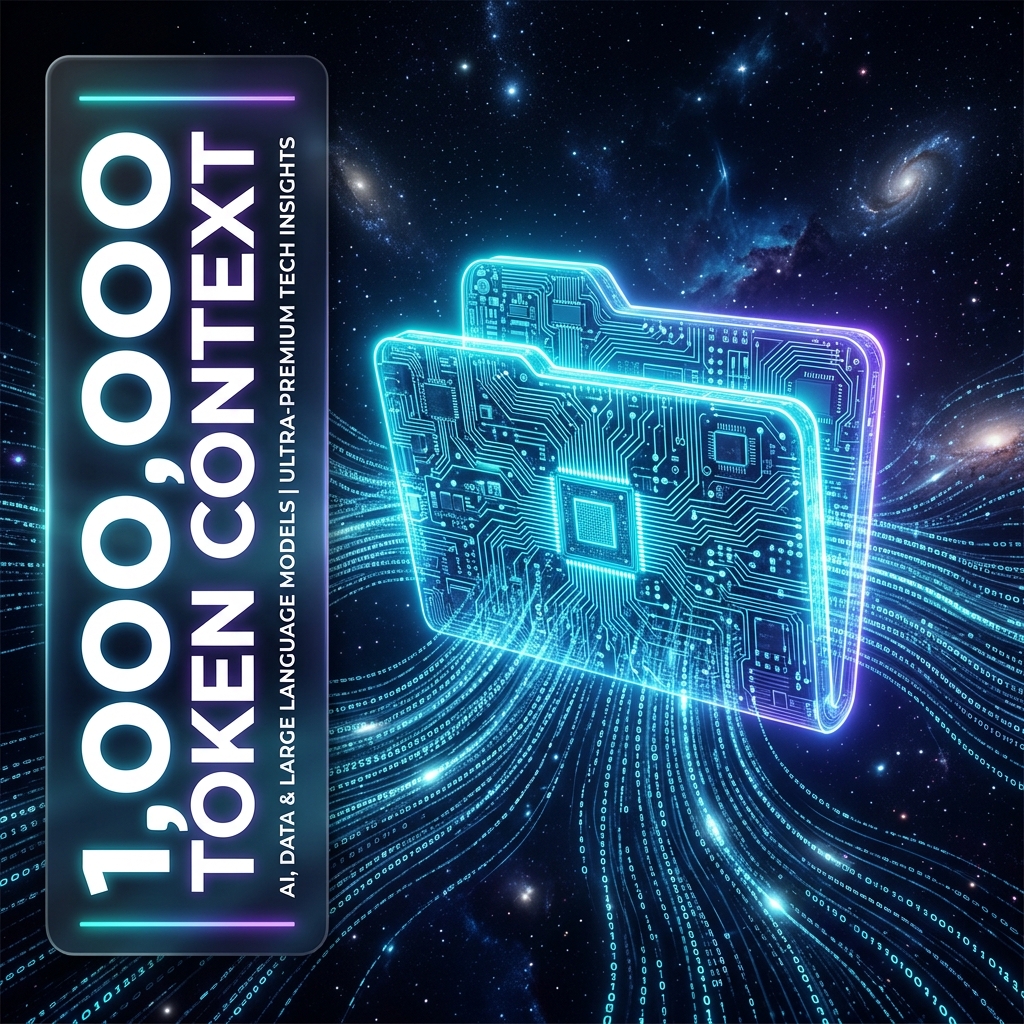
Kimi K3, released on July 16, 2026, supports a 1,000,000 token context window. That is roughly 750,000 words or 800-1,000 source files.
In this guide, we will walk through how to package your entire repository, feed it to Kimi K3, and use prompt caching to run multi-file refactors for pennies.
---
Step 1: Pack Your Codebase Into a Single Text Document
To send your codebase to Kimi K3 (either via the Web UI or the API), you need to format it into a single clean text file that preserves your directory structure.
Here is a simple, dependency-free Python script you can run in your project root to generate this package. It respects common ignore lists like .git, node_modules, and .next:
Run this script:
This outputs a single codebase_context.txt file. For a typical SaaS boilerplate or Next.js app, this file will sit between 50,000 and 300,000 tokens — well within Kimi's 1,000,000 token limit.
---
Step 2: Set Up Prompt Caching on the Kimi API
Now that we have our context file, we could just upload it to the Kimi Web UI. However, if you are building developer tools, running agentic loops, or want to script your codebase maintenance, the API is where the magic happens.
If you send 200,000 tokens of context on every single API request, your bills will stack up fast. At Kimi's base input rate of $3.00 per 1M tokens, a single request with a 200K context costs $0.60. If you have a conversation back-and-forth for 10 turns, that is $6.00.
To solve this, Moonshot AI supports automatic prompt caching. If you reuse the exact same prefix of context in consecutive API requests, the API will hit the cache.
Cached tokens only cost $0.30 per 1M tokens — a 90% discount.
To ensure you trigger prompt caching, structure your API payload like this:
When you run this script subsequent times (e.g., asking for optimization tips, or asking it to refactor a specific hook), you will only pay the cached rate ($0.30/1M) for the massive codebase block, saving huge amounts on API costs.
---
Step 3: Write Codebase Prompts That Actually Work
Having the model see your codebase is only half the battle. If your prompt is vague, Kimi will output generalized advice. Because Kimi K3 is an MoE model, it responds exceptionally well to structured instruction.
Here are three tested templates for codebase operations:
1. The Global Architecture Audit Prompt
Use this to locate debt, dead code, or structural inconsistencies across folders:Prompt:
"Analyze the directory layout and imports in the codebase context. Highlight:
1. Circular dependencies where module A imports B and B imports A.
2. Redundant utility functions (e.g., multiple places implementing date formatting).
3. Dead files that are created but never imported anywhere.
Output a structured markdown report showing File Path -> Problem -> Proposed Refactor."
2. The Integration Debugger Prompt
Use this when you have a bug that jumps across the frontend/backend divide:Prompt:
"I am receiving a 'Cannot read properties of undefined (reading: data)' error in [Frontend Component File]. Inspect that file, track down the API route it fetches from [Backend Route File], and check the database service file [DB Service File] that fetches the raw records. Tell me:
1. Where the payload structure mismatches.
2. Write the exact code change needed in the schema, route, and component to prevent this crash."
3. The Feature Migration Planner Prompt
Use this when refactoring from an old library or system to a new one:Prompt:
"We want to migrate from using [Old Library/Pattern, e.g., local state] to [New Library/Pattern, e.g., Zustand] across the application. Inspect all files in the context, list every file that currently uses [Old Library/Pattern], and draft a step-by-step migration plan. Rewrite the first 3 files fully to show the team the exact transition pattern."
---
Comparison: Kimi K3 vs. Claude Fable 5 & GPT-5.6 Sol
Why choose Kimi K3 for codebase tasks instead of the alternatives? Let's look at the numbers.
| Feature / Model | Kimi K3 | Claude Fable 5 | GPT-5.6 Sol |
|---|---|---|---|
| Max Context | 1,000,000 tokens | 200,000 tokens | 128,000 tokens |
| Codebase Size Capacity | Full application (~1,000 files) | Small module (~150 files) | Snippets (~80 files) |
| Prompt Caching Cost | $0.30 / 1M input | $0.75 / 1M input | $1.50 / 1M input |
| Frontend Coding Rank | #1 | #2 | #3 |
While Claude Fable 5 and GPT-5.6 Sol generally score slightly higher on general-purpose reasoning benchmarks, they are physically constrained by their context windows. You cannot build a mental map of a 500-file repository if the model can only see 80 of them. Kimi K3's raw capacity makes it the superior choice for high-level refactoring and global analysis.
---
Conclusion: Start Vibe Coding at Scale
The combination of 1M context + $0.30 cached tokens changes how we build software. You no longer need to be selective about what context you share. Package the whole app, keep it in the prompt cache, and converse with the AI as if it is a senior engineer who has read every single line of your codebase.
For more templates, deep dives, and production-ready Next.js products, check out the Vibe Coding Codex Shop.
Ready to Stop Typing Code & Start Directing AI Systems?
Join 5,000+ developers building real production software with AI. Learn the 7-Stage Vibe Coding OS, harness engineering, and earn your verified Build DNA Certificate.